7 Fascinating Facts About Prambanan Temple You Should Know
Written by
Admin
Published
September 28, 2026
Reading time
5 min read
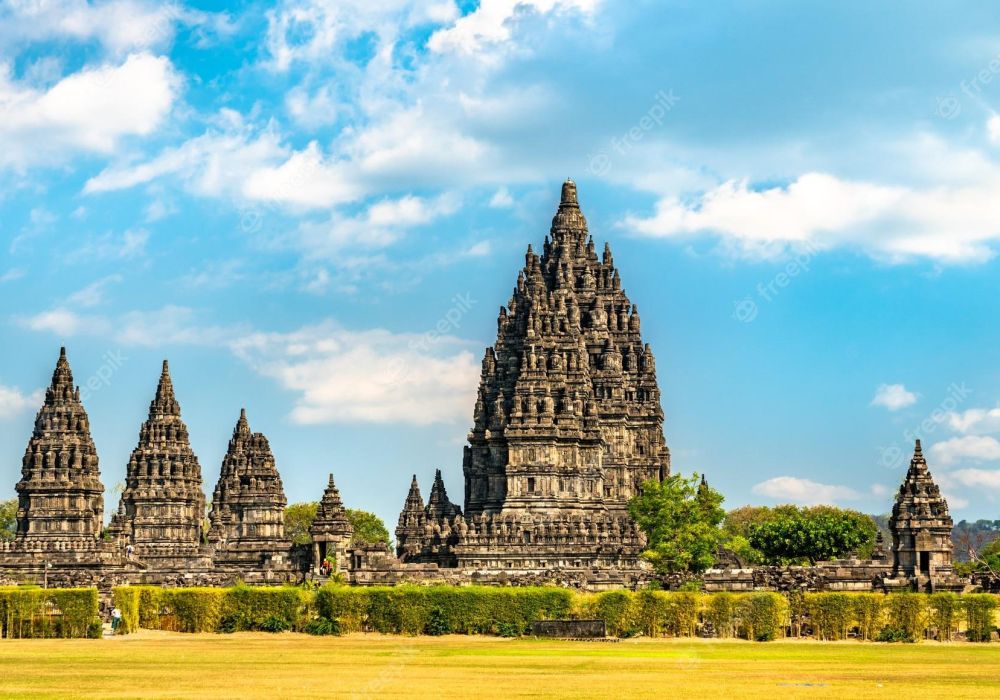
Rising dramatically above the landscape between Yogyakarta and Central Java, Prambanan Temple is one of Indonesia's most spectacular Hindu monuments. With its towering spires, intricate stone carvings, and stories of gods, heroes, and ancient kingdoms, Prambanan is much more than a beautiful place to visit. It is a remarkable window into the history and religious traditions of ancient Java. Planning to visit Prambanan? Here are 7 fascinating facts about Prambanan Temple that will make your visit even more interesting.
1. Prambanan Was Built in the 9th Century
Prambanan dates back to the 9th century, during the era of the Ancient Mataram Kingdom in Java. The temple complex was built as a Hindu religious complex and is dedicated to the Trimurti—the three major Hindu deities: Shiva, Vishnu, and Brahma. The scale and architectural sophistication of Prambanan show the remarkable achievements of Javanese civilization more than a thousand years ago.
2. The Main Temple Is Dedicated to Shiva
At the heart of Prambanan stand three magnificent temples dedicated to the Trimurti. The largest and tallest is the Shiva Temple, rising approximately 47 meters above the ground. Beside it stand the temples dedicated to Brahma and Vishnu. The Shiva Temple dominates the skyline and is one of the most recognizable features of Prambanan. For this reason, UNESCO describes the Prambanan Temple Compounds as the largest temple compound dedicated to Shiva in Indonesia.
3. Prambanan Is More Than Just One Temple
When people say “Prambanan,” they often imagine the three tall temples in the center. But the Prambanan Temple Compounds are much larger. Prambanan Temple itself consists of 240 temples, while the UNESCO World Heritage property also includes other important temple complexes, including Sewu, Lumbung, and Bubrah. Altogether, the compound contains more than 500 temples and structures in various conditions. One of the most fascinating things about the area is that Sewu Temple is Buddhist, while Prambanan is Hindu. This makes the archaeological landscape an extraordinary reminder of the coexistence of different religious traditions in ancient Java.
4. The Walls Tell the Story of the Ramayana
Walk around Prambanan and look closely at the stone walls. You will find beautifully carved reliefs depicting scenes from the Ramayana, one of the great Hindu epics. The story follows Rama, Sita, Lakshmana, Hanuman, and their struggle against Ravana. At Prambanan, the story is transformed into a series of stone carvings that can be followed as visitors move through the temple complex. The Ramayana story is still alive in Yogyakarta today through performances such as the Ramayana Ballet, creating a fascinating connection between ancient stone carvings and contemporary performing arts.
5. The Legend of Roro Jonggrang Is Connected to Prambanan
Prambanan is closely associated with one of Java's most famous legends: Roro Jonggrang. According to the traditional story, a powerful prince named Bandung Bondowoso fell in love with Princess Roro Jonggrang. She gave him an almost impossible challenge—to build 1,000 temples in a single night. The story ends with a dramatic deception and the princess being transformed into stone. Although this is a folklore tradition rather than the historical explanation for Prambanan's construction, the legend remains deeply connected to the cultural identity of the temple and is one of the stories visitors often hear when exploring the site.
6. Prambanan Has Survived Earthquakes, Eruptions, and Centuries of Neglect
After its period of prominence, Prambanan was eventually abandoned and suffered damage from natural disasters, including earthquakes and volcanic activity. The temples also deteriorated over centuries of neglect. The complex was rediscovered in the 18th century, and systematic restoration began much later. Restoration has continued for generations, using both traditional stone-working techniques and modern conservation methods. The preservation work is particularly important because Java remains vulnerable to earthquakes and volcanic activity. So when you look at Prambanan today, you are not simply looking at an ancient building—you are looking at the result of centuries of survival and conservation.
7. Prambanan Became a UNESCO World Heritage Site in 1991
In 1991, the Prambanan Temple Compounds were inscribed on the UNESCO World Heritage List because of their outstanding cultural, architectural, and religious significance. UNESCO recognizes Prambanan as an outstanding example of classical Hindu architecture and art in Indonesia. The site is particularly remarkable because it brings together monumental architecture, religious symbolism, stone sculpture, and narrative reliefs within a single archaeological landscape.
More Than a Beautiful Temple
Prambanan is easy to admire from a distance. Its tall towers, dramatic silhouette, and intricate carvings make it one of the most photogenic places near Yogyakarta. But look closer, and another story emerges.
A story of ancient kingdoms.
A story of Hindu and Buddhist traditions.
A story carved into stone.
And a story that is still told through legends, dance, and local culture today.
So when you visit Prambanan, take your time. Look beyond the photographs, follow the reliefs, listen to the stories, and imagine the civilization that created this extraordinary monument more than a thousand years ago.
Because Prambanan is not just a temple to see—it is a story to discover.
Comments
No comments yet! Be the first to share your thoughts.
