5 Must-Try Foods in Yogyakarta: A Taste of Jogja
Written by
Admin
Published
September 28, 2026
Reading time
5 min read
A trip to Yogyakarta is not complete without tasting its local food. Known as one of Indonesia's cultural centers, Jogja has a culinary tradition that reflects the character of its people: warm, comforting, flavorful, and deeply connected to everyday life. From smoky goat satay cooked over charcoal to comforting bowls of noodles and spicy dishes that live up to their name, there are plenty of reasons to explore Yogyakarta through food. If you're wondering what to eat in Yogyakarta, here are five local dishes you should not miss.
1. Sate Klathak – Yogyakarta's Unique Goat Satay
Let's start with one of the most distinctive dishes you can find around Yogyakarta: Sate Klathak. Unlike ordinary satay, Sate Klathak is made from goat meat and traditionally grilled using iron skewers, often made from bicycle spokes. The metal helps conduct heat into the meat while it cooks over charcoal. The seasoning is deliberately simple, allowing the flavor of the goat meat and the smoky aroma from the grill to stand out.
Sate Klathak is traditionally associated with the Jejeran and Wonokromo areas of Bantul, where the dish developed as part of the local culinary tradition. It was also recognized as Indonesian Intangible Cultural Heritage in 2019. The satay is commonly served with rice and a warm bowl of gulai broth.
Why try it?
Because it doesn't taste like ordinary satay. The simple seasoning, large pieces of goat meat, charcoal grilling, and unusual metal skewers make Sate Klathak a uniquely Yogyakarta experience.
2. Gudeg – The Dish That Defines Jogja
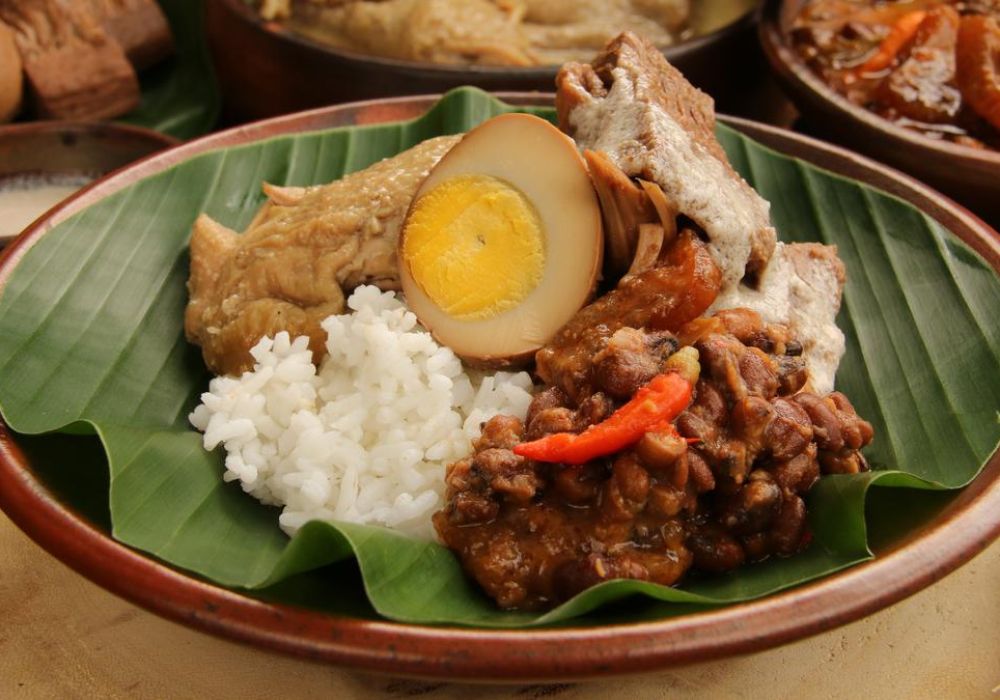
Ask someone to name a food associated with Yogyakarta, and Gudeg will probably be the first answer. Gudeg is made from young jackfruit that is slowly cooked with coconut milk, palm sugar, and spices. The long cooking process gives it a distinctive brown color and its characteristic sweet and savory flavor. A traditional serving of gudeg usually comes with rice and several side dishes, such as chicken, eggs, tofu or tempeh, and sambal krecek.
The contrast is what makes the meal interesting: sweet and rich gudeg meets the spicy, savory taste of sambal krecek. Gudeg has become so closely associated with the city that Yogyakarta is often known as the City of Gudeg.
Why try it?
Because gudeg isn't simply a local dish. It is one of the culinary symbols of Yogyakarta and an important part of the city's cultural identity.
3. Bakmi Jawa – A Bowl of Noodles with a Javanese Touch
For a comforting dinner after a day of exploring Jogja, try Bakmi Jawa. This traditional Javanese noodle dish is available in several versions, including bakmi goreng (fried noodles) and bakmi godhog (noodle soup). What makes Bakmi Jawa special is the way it is traditionally prepared. Many vendors cook each portion individually, often using a charcoal stove or anglo. The noodles are combined with ingredients such as chicken, egg, vegetables, and a savory broth or seasoning.
The cooking process can take a little longer than fast-food noodles—but that's part of the experience. In the evening, you'll often find small Bakmi Jawa stalls filled with locals enjoying a hot plate or bowl of noodles.
Why try it?
Because Bakmi Jawa gives you a taste of everyday Yogyakarta: simple food, traditional cooking techniques, and a relaxed evening atmosphere.
4. Oseng Mercon – Yogyakarta's Explosive Spicy Dish
Think you can handle spicy food? Then you have to try Oseng Mercon. The word mercon means firecracker, and the name perfectly describes the explosive chili kick of this dish. Oseng Mercon is typically made with beef cuts such as kikil, fat, skin, or other beef parts, stir-fried with generous amounts of bird's eye chili and oil.
One of the most famous versions is associated with Bu Narti, whose stall helped popularize the dish in Yogyakarta. The dish became known for its intense spiciness and became a favorite among late-night food seekers. Eat it with hot steamed rice and prepare yourself for a serious kick.
Why try it?
Because it offers something completely different from the sweet flavors often associated with Javanese cuisine. A word of warning: if you don't usually eat spicy food, start slowly!
5. Soto – A Comforting Bowl for Any Time of Day
Sometimes, the best local food is the simplest. Soto is one of Indonesia's most popular traditional soups, and Yogyakarta has its own local variations. A typical bowl combines a flavorful broth with ingredients such as chicken or beef, rice or noodles, vegetables, and fresh herbs. The exact recipe can vary from one vendor to another, which is part of the fun of exploring local soto.
In Yogyakarta, you can find soto at traditional food stalls, markets, and neighborhood eateries. Some places serve it early in the morning, making it a popular breakfast option, while others are open throughout the day. For travelers, soto is an easy introduction to Indonesian food: warm, aromatic, filling, and customizable with chili, lime, or other condiments.
Why try it?
Because sometimes you don't need an elaborate meal. A hot bowl of soto at a small local warung can be one of the most authentic ways to experience everyday food culture in Jogja.
Taste Yogyakarta Beyond the Tourist Attractions
Yogyakarta is famous for its temples, royal heritage, traditional arts, and beautiful landscapes. But there is another way to understand the city: through its food. Try the smoky Sate Klathak in Bantul. Taste the sweet and savory Gudeg that made Jogja famous. Enjoy a late-night plate of Bakmi Jawa. Challenge yourself with fiery Oseng Mercon. And sit down with a comforting bowl of Soto at a local warung.
Each dish tells a different story about Yogyakarta—its ingredients, traditions, communities, and everyday way of life. So when you visit Jogja, don't just ask:
“What should I see?”
Ask:
“What should I taste?”
Because sometimes, the best way to discover a city is one delicious plate at a time.
Comments
No comments yet! Be the first to share your thoughts.
